
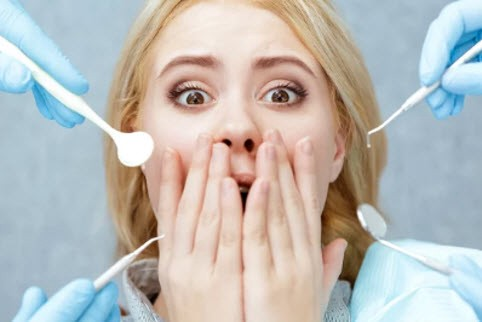
The dentist near Clementi can treat these scenarios by redirecting the anesthesia (offering a lot more), waiting longer before beginning treatment, or holding off the treatment and also suggesting an antibiotic to minimize the infection. One more crucial issue is that various people have various thresholds for discomfort. I have had patients who have shared real pain from a routine dental test and others that conveniently tolerated root canal or oral surgery without anesthesia (though I don't advise it).
Throughout the years, I have found an intriguing irony when treating scared patients. The large majority of these individuals have an extremely high pain tolerance. When you think about it, it type of makes sense. Afraid patients commonly avoid dental treatment and also sustain years of pain from their teeth. It promises that if they had an inadequate pain tolerance, they would see their dental expert the moment a tooth became delicate. Due to this, as soon as a frightened patient develops trust with their dental professional, the concern rapidly evaporates.
The scared individual soon discovers that oral therapy is not almost as unpleasant as the discomfort they go through every day with infected teeth. When I have individuals who tell me they hesitate of the discomfort, I make them a promise. I state that I will not execute the procedure (removal, origin canal, and so on) if they are feeling pain-- simple as well as easy. In uncommon events, I will even reschedule the person for various days if the therapy can not be easily finished.
What Can Be Done Concerning Pain After the Therapy?
Afraid people are often concerned that they will be in discomfort following an oral procedure. Dental practitioners are simply as worried about managing pain after treatment as they are throughout it.
A dental practitioner with a strong technique can place extreme stress on the teeth and periodontals, which can create better pain later. Dental experts can likewise make use of an anesthetic that lasts longer (bupivacaine) or offer discomfort drugs like Advil (Advil, Motrin) before some procedures since these steps have been revealed to lower pain after therapy. Dental practitioners are also licensed to recommend powerful numbing medicines that are extremely effective in reducing or getting rid of any discomfort after oral therapy.
The final action the dental professional can take is to call the client at home after a possibly painful treatment. I such as to see just how my person is doing, if the medication is working, or if the client has any type of questions regarding the therapy.
Besides being the ideal point to do, research has shown that individuals' assumption of pain is much less when the dental professional calls them into the house to figure out how they are doing. The majority of dentists realize that pain is a subjective point. What this suggests is that an individual's feelings have a huge impact on their assumption of discomfort. For instance, if an individual obtains the sensation that the dental expert is insensitive or lacks empathy, there is a sporting chance that concrete measures the dental practitioner uses to minimize pain will be much less than effective.
The fearful individual soon learns that oral treatment is not virtually as uneasy as the discomfort they go through every day with contaminated teeth. Afraid individuals are usually concerned that they will be in discomfort complying with an oral procedure. Dentists are just as concerned with handling pain after therapy as they are during it. Dental professionals can likewise use an anesthetic that lasts longer (bupivacaine) or offer discomfort drugs like Advil (Advil, Motrin) before some treatments because these measures have been shown to lower pain after therapy. If a client gets the feeling that the dentist is insensitive or does not have a concern, there is a great opportunity that other concrete procedures the dentist utilizes to reduce pain will certainly be much less than effective.